


Table of contents [Show]
Introduction
Bloating is a common digestive complaint that affects pe niople of all ages. It often causes a feeling of fullness, tightness, or swelling in the abdomen, sometimes accompanied by excessive gas, stomach discomfort, or frequent burping. While occasional bloating is usually harmless, it can be uncomfortable and may interfere with your daily activities.
In many cases, bloating is linked to eating habits, certain foods, dehydration, constipation, or digestive conditions. Fortunately, simple lifestyle and dietary changes can help relieve and prevent bloating.
As a nutritionist, I often remind clients that bloating is not always caused by eating too much—it may also be caused by eating too quickly, consuming gas-producing foods, or not drinking enough water.
Here are five effective ways to reduce bloating naturally and support a healthier digestive system.
1. Drink Enough Water Throughout the Day
One of the easiest ways to reduce bloating is to stay properly hydrated.
When your body doesn't get enough water, it may retain fluid, making you feel bloated. Drinking enough water also helps soften stool, supports healthy digestion, and reduces the risk of constipation—a common cause of bloating.
Tips:
- Aim for about 2–3 liters of water daily, depending on your age, activity level, and climate.
- Drink a glass of water before meals.
- Reduce sugary drinks and carbonated beverages.
2. Eat More Fiber Gradually

Fiber helps food move smoothly through the digestive tract and promotes regular bowel movements.
However, increasing fiber too quickly can temporarily increase gas and bloating. The key is to increase your fiber intake gradually while drinking enough water.
High-fiber Nigerian foods include:
- Beans
- Sweet potatoes
- Oats
- Garden eggs
- Ugu (fluted pumpkin leaves)
- Okra
- Pear (Avocado)
- Pawpaw (Papaya)
A healthy gut benefits from a variety of fiber-rich fruits and vegetables.
3. Avoid Eating Too Fast
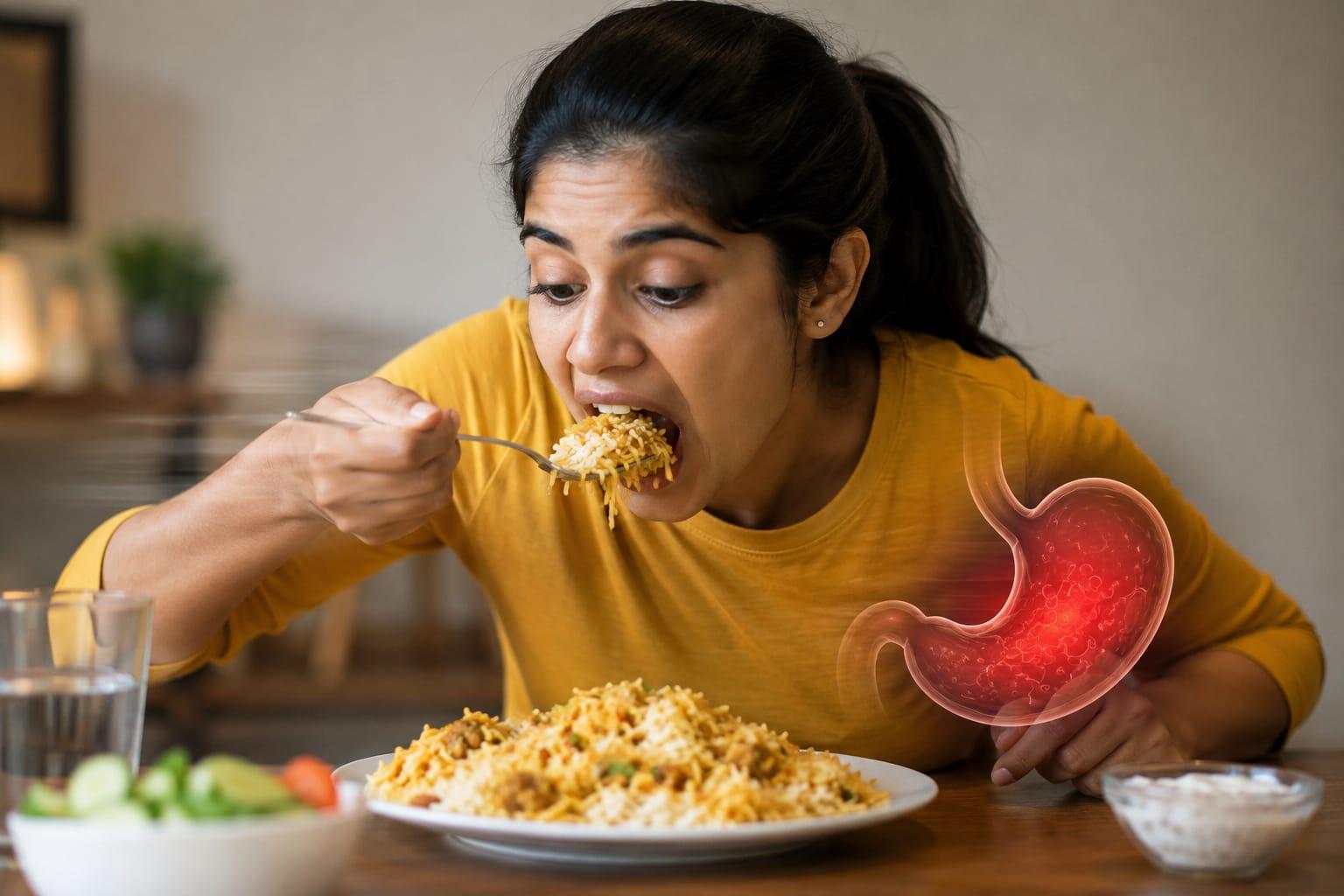
Eating too quickly can cause you to swallow excess air, which may lead to bloating and gas.
Slow down during meals by:
- Chewing food thoroughly.
- Taking smaller bites.
- Avoiding talking while chewing.
- Eating without distractions such as television or your phone.
Eating mindfully also helps your brain recognize fullness, reducing the risk of overeating.
4. Limit Foods That Trigger Bloating

Some foods naturally produce more gas during digestion.
Common culprits include:
- Carbonated drinks
- Fried foods
- Highly processed snacks
- Excess onions
- Large amounts of beans (especially if not soaked properly)
- Excess cabbage
- Artificial sweeteners in some sugar-free products
This doesn't mean you should avoid these foods completely. Instead, identify which foods trigger your symptoms and enjoy them in moderation.
If beans cause bloating, soaking them overnight before cooking may help reduce gas-producing compounds.
5. Stay Physically Active

Light physical activity encourages normal movement of food and gas through the digestive tract.
Even a short walk after eating can reduce feelings of fullness and bloating.
Try to:
- Walk for 20–30 minutes daily.
- Stretch regularly.
- Practice gentle yoga.
- Avoid sitting for long periods after meals.
Regular movement also supports healthy bowel function.
Bonus Tips to Prevent Bloating
In addition to the five strategies above:
- Avoid overeating.
- Reduce excess salt intake.
- Manage stress through relaxation techniques.
- Get enough sleep each night.
- Eat meals at regular times.
- Include fermented foods like plain yogurt if they suit your digestion.
When Should You See a Doctor?
Occasional bloating is common, but seek medical advice if you experience:
- Severe abdominal pain.
- Persistent bloating lasting several weeks.
- Blood in your stool.
- Unexplained weight loss.
- Frequent vomiting.
- Difficulty swallowing.
- Persistent diarrhea or constipation.
These symptoms may indicate an underlying medical condition that requires evaluation.
Frequently Asked Questions (FAQs)
Is bloating the same as gaining weight?
No. Bloating is usually caused by gas or fluid buildup, while weight gain involves an increase in body fat, muscle, or overall body mass.
Can drinking warm water reduce bloating?
Warm water may help some people feel more comfortable and support digestion, but there is limited evidence that it is more effective than cool or room-temperature water.
Which fruits help reduce bloating?
Fruits such as papaya, pineapple, bananas, oranges, and kiwi contain nutrients and enzymes that may support healthy digestion as part of a balanced diet.
Can stress cause bloating?
Yes. Stress can affect the digestive system and may contribute to bloating in some individuals. Managing stress through relaxation, exercise, and adequate sleep may help.
Conclusion
Bloating can be uncomfortable, but it is often manageable with simple lifestyle changes. Staying hydrated, eating enough fiber, slowing down during meals, limiting foods that trigger symptoms, and staying physically active are effective ways to support healthy digestion and reduce bloating.
If your bloating is persistent, severe, or accompanied by other concerning symptoms, consult a healthcare professional for proper evaluation and treatment.
SEO Keywords: Reduce bloating naturally, how to stop bloating, foods that cause bloating, Nigerian foods for digestion, healthy digestion tips, nutritionist advice for bloating, stomach bloating remedies, digestive health, bloating after eating, natural remedies for bloating.